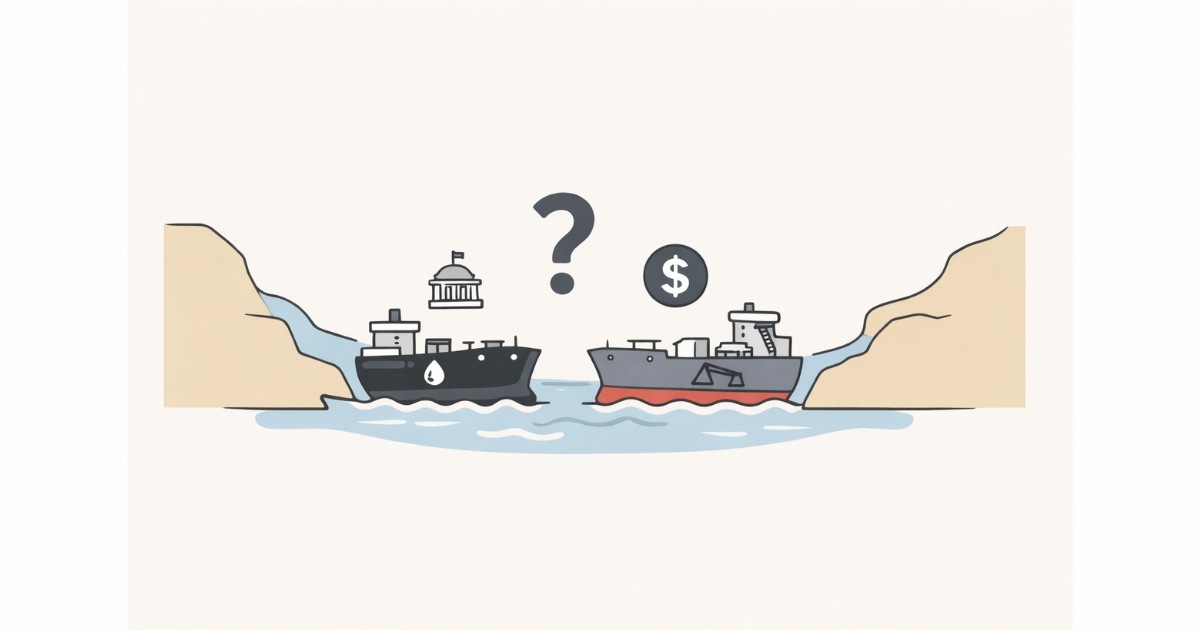
The ongoing geopolitical tensions in West Asia have drawn attention to the ships transporting crude oil to India through one of the world’s most critical maritime corridors. The Strait of Hormuz oil tankers to India have become a major topic of discussion as the region experiences heightened security risks.
The Strait of Hormuz is a narrow waterway connecting the Persian Gulf with the Gulf of Oman. Around one-fifth of the world’s oil supply passes through this route every day.
As tensions between Iran and Israel escalate, questions have emerged about how India continues to secure energy shipments through the region. Reports indicate that oil tankers carrying supplies for India are still moving through the corridor, but the situation has highlighted several issues related to ship ownership, operational costs, and maritime security.
Understanding how the Strait of Hormuz oil tankers to India operate helps explain the logistics behind one of the world’s largest energy supply chains.
Why the Strait of Hormuz Is Crucial for India
The Strait of Hormuz oil tankers to India are vital because the country relies heavily on imported crude oil to meet its energy needs.
India imports more than 80 percent of its crude oil consumption from overseas markets. A significant portion of this supply originates from Gulf nations including Saudi Arabia, Iraq, and the United Arab Emirates.
Oil shipments from these countries must pass through the Strait of Hormuz before reaching the Arabian Sea and eventually Indian ports.
Because such a large volume of energy supplies travels through this narrow corridor, any disruption can affect global oil markets as well as domestic fuel availability in importing nations like India.
This is why the safe movement of Strait of Hormuz oil tankers to India is considered strategically important.
Government-Owned or Private Tankers?
One of the main questions surrounding the Strait of Hormuz oil tankers to India is whether these ships are owned by the government or private companies.
In reality, the vessels transporting crude oil to India belong to a mix of both public and private shipping operators.
India’s government-owned shipping company Shipping Corporation of India operates several oil tankers that carry crude oil and petroleum products across international waters.
However, a large portion of global oil transportation is handled by private shipping firms and international tanker operators.
These companies charter vessels to oil producers, traders, and refiners that require transportation for their cargo.
As a result, the Strait of Hormuz oil tankers to India often include ships owned by international companies as well as those operated by Indian public sector enterprises.
This combination allows India to maintain flexibility in securing shipping capacity.
How Tanker Chartering Works
The logistics behind the Strait of Hormuz oil tankers to India involve a complex system known as tanker chartering.
Oil companies that purchase crude from exporting nations usually hire ships to transport the cargo to refineries.
This can be done through short-term or long-term charter agreements.
In some cases, the seller of the oil arranges the transportation. In other situations, the buyer is responsible for chartering the tanker.
Indian refiners including Indian Oil Corporation, Bharat Petroleum, and Hindustan Petroleum frequently use a combination of shipping options.
They may rely on government-owned ships, private vessels, or international tanker operators depending on market conditions.
This flexible system helps ensure the continued movement of Strait of Hormuz oil tankers to India even during challenging geopolitical situations.
Cost of One Tanker Trip
Transporting crude oil across international waters is an expensive operation.
The cost of operating Strait of Hormuz oil tankers to India depends on several factors including vessel size, fuel prices, insurance costs, and security risks.
Large crude carriers known as Very Large Crude Carriers (VLCCs) are commonly used for long-distance shipments.
These ships can carry up to two million barrels of crude oil in a single voyage.
Industry estimates suggest that the cost of chartering and operating such a vessel for a single trip between the Gulf region and India can run into several million dollars.
When converted to Indian currency, the total cost of a voyage can reach tens of crores of rupees depending on market conditions.
Insurance premiums often rise sharply during periods of geopolitical tension, which further increases the expense of operating Strait of Hormuz oil tankers to India.
Security Risks in the Region
The Strait of Hormuz oil tankers to India face heightened security concerns during periods of geopolitical conflict.
Military tensions in the region can increase the risk of attacks, blockades, or disruptions to maritime traffic.
Because the strait is relatively narrow, even a small incident could affect global shipping.
Naval forces from several countries frequently patrol the area to ensure safe passage for commercial vessels.
Shipping companies also use monitoring systems and security escorts in high-risk zones.
These precautions aim to protect the Strait of Hormuz oil tankers to India and ensure that critical energy shipments reach their destinations safely.
India’s Diplomatic Efforts
India has also relied on diplomatic channels to ensure the continued movement of Strait of Hormuz oil tankers to India.
Maintaining strong relationships with countries in the Gulf region allows India to coordinate energy trade and maritime security.
Diplomatic engagement helps ensure that Indian vessels and cargo shipments can continue to operate even during periods of tension.
Government officials frequently communicate with regional authorities to monitor the situation and address potential disruptions.
Such diplomatic coordination plays a key role in maintaining stable energy supply routes.
Role of the Indian Navy
Security for the Strait of Hormuz oil tankers to India is also supported by maritime patrols conducted by the Indian Navy.
The navy has previously deployed ships in the region to monitor shipping routes and assist Indian commercial vessels if required.
Naval presence helps enhance confidence among shipping companies operating in sensitive areas.
In addition to security operations, naval forces may provide guidance and coordination for vessels traveling through high-risk maritime corridors.
These efforts contribute to the safe movement of Strait of Hormuz oil tankers to India during periods of regional tension.
Impact on Global Oil Markets
The movement of Strait of Hormuz oil tankers to India also affects global energy markets.
Because a large share of the world’s oil passes through the strait, any disruption can influence international oil prices.
Traders closely monitor developments in the region to assess potential supply risks.
If shipping becomes restricted, global crude prices often rise due to concerns about reduced supply.
Stable tanker movement therefore plays an important role in maintaining balance in the global energy market.
For importing countries like India, uninterrupted shipments help prevent sudden price shocks.
Importance for India’s Energy Security
The continued operation of Strait of Hormuz oil tankers to India is essential for maintaining the country’s energy security.
India’s transportation sector, manufacturing industry, and power generation systems all rely on a stable supply of petroleum products.
Any prolonged disruption in oil shipments could affect economic activity and fuel availability.
By ensuring that tanker operations continue even during geopolitical tensions, India can safeguard its energy requirements.
This is why both diplomatic and security measures are used to protect the flow of oil shipments through the Strait of Hormuz.
Conclusion
The movement of Strait of Hormuz oil tankers to India highlights the complex logistics involved in maintaining global energy supply chains.
These vessels are operated by a mix of government-owned and private shipping companies, with oil companies chartering ships to transport crude from Gulf producers to Indian refineries.
Each voyage involves significant costs, especially during periods of geopolitical tension when insurance and security expenses increase.
Despite the risks associated with the region, coordinated diplomatic efforts, naval monitoring, and international shipping networks continue to support the safe movement of oil cargo.
As global energy demand grows and geopolitical dynamics evolve, the operation of Strait of Hormuz oil tankers to India will remain a crucial component of the country’s energy security strategy.
Also Read: Share Market Rise BIG Boost: Key Factors That Pushed Sensex and Nifty Higher on March 16